


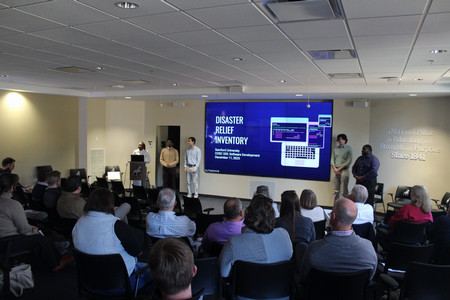
Computer science students in Samford University’s Howard College of Arts and Sciences spent the fall working on real software for real clients in assistant professor Gregory Kawell’s Software Design course. Across three sections of Computer Science 320, students operated as full development teams using the Agile framework, meeting in standups, managing backlogs and building applications intended for real world use.
The semester concluded Dec. 11 with a final exam presentation in front of visiting industry professionals, providing students with the chance to demonstrate their work and practice professional communication in a setting like the workplaces many hope to join.
“I think the first thing that really stood out was Dr. Kawell sending us out to do our own research and making us learn in a way that is not typical,” said junior Kelmy Lemus. “Other classes give you something to read then quizzes, but this one actually prepares you for your future work and jobs.”
The structure of the course means students spend far less time listening and far more time building. They break down tasks, assign responsibility, manage deadlines and seek out solutions without step-by-step instructions. Senior Noah Berry, a pitcher on the Samford baseball team, said the pace and workflow felt close to what he has seen in professional environments.
“We’re working in an Agile workflow, so we’re meeting every two weeks on big goal sprints and having individual meetings almost every day,” Berry said. “It creates a good workflow and has helped us move along in a timely manner.”
Senior Dylan Spivey said the experience reshaped how he views software development.
“This class has been the biggest benefit to me,” Spivey said. “We learned how to turn a product that wasn’t close to finished into something that might be close to an alpha or beta stage now. It’s exciting to see the program grow and I learned that I really enjoy doing this.”
Another team spent the semester turning a published childhood cancer support book into a mobile app designed to help families access reliable information more easily. Senior Maurice Davis said the project taught his team how to take an abstract idea and turn it into a functioning tool.
“We started off with a vision, but we couldn’t necessarily see it manifested yet,” Davis said. “That vision has brought us to where we’re at now with the app almost being finished.”
Junior Ainslee Johnson said the class broadened her understanding of what the development process looks like, despite not having a background in software engineering.
“A lot of us don’t have app development experience,” Johnson said. “My career interests are geared toward cybersecurity. If I ever wanted to switch to something more software related, this would be a great project to have in my portfolio.”
Kawell’s course design emphasizes accountability and consistency. Students meet weekly with him for sprint planning and retrospectives, but they control nearly everything else about the process. Davis said that balance between freedom and guidance made a difference.
“I can’t even describe the amount of help Dr. Kawell has given us,” Davis said. “He helps us coordinate all of our thoughts and our time, guiding us through it even though it’s our own project. His input and leadership are insurmountable.”
Along with the technical skills, students said the class strengthened teamwork, communication and adaptability. Johnson said one of Kawell’s early suggestions helped her team build trust quickly.
“At the beginning of the semester, Dr. Kawell suggested we go out and do a social event together and not talk about our project,” Johnson said. “It felt like we were coworkers. We understood what was going on in each other’s lives and why we might need to cover slack when people couldn’t make meetings. It helped with accountability.”
All three sections presented their projects during the Dec. 11 final exam showcase in Ingalls Hall. Students demonstrated technical features, explained design decisions and took questions from faculty and industry visitors.
Though some students called the showcase nerve-wracking, they found the experience valuable. Lemus said standing in front of professionals made the stakes feel more real. “It gives you opportunities you don’t get very often,” he said. “Being able to show professionals what we built felt special.”
Berry said presenting a finished product helped him understand how the skills learned in class translate to a professional environment.
“You don’t know what you’re going to do after graduation,” Berry said. “Showing something you’re proud of to actual professionals could land you an opportunity somewhere really cool.”
Davis said the presentations felt like a natural next step in preparing for future careers.
“This is what we came to class for,” Davis said. “We’re going to have to do this in the future, so it’s better to get familiar with it now.”
Students said the course gave them a clearer sense of what it takes to build software from the ground up. It also gave them a sense of confidence about stepping into a field where development teams rely on communication, problem solving and the willingness to adjust.
By the end of the semester, they agreed that the class offered something more than a list of new technical skills. As Johnson put it, “You get to show more of your character and your ability.”
Experiences like these reflect why Samford earned three Top 10 national rankings in the 2026 Wall Street Journal/College Pulse Best Colleges list, including a #3 ranking in the nation for career preparation, #7 for learning opportunities and #5 for most-recommended colleges. The applied learning, faculty mentorship and real-world project experience showcased in this course directly mirror the qualities the WSJ identifies as hallmarks of exceptional career readiness.
GIVE: Support impactful work at Howard College of Arts and Sciences.
